
Generation Beat #1: Brian Hassett
Canadian scribe kicks off new series

We are very pleased to unveil a new feature at Rock and the Beat Generation, a series of interviews gathered under the heading ‘Generation Beat’ which will focus on a number of transatlantic trailblazers who have carried the Beat torch into the twenty-first century, a grouping of slightly younger writers, editors and publishers whose energy has kept this radical literary tradition alive and kicking as we move well past the millennium.
Conducting these fresh and lively exchanges is LEON HORTON, a regular and welcome contributor to these digital pages, and we are delighted to identify the first subject in our sequence of conversations as the ever-energetic BRIAN HASSETT.
Hassett is a Canadian-born writer, producer, performer, promoter, Beat scholar and countercultural evangelist. He is the author of The Hitchhiker’s Guide to Jack Kerouac (2015), How the Beats Begat the Pranksters (2017), On the Road with Cassadys & Further Visions (2018), Holy Cats! Dream-Catching at Woodstock (2019), and Blissfully Ravaged in Democracy (2020).
John Cassady, son of Neal and Carolyn Cassady, said of him: ‘He writes the way he talks, and lives the way he writes. Which reminds me of my Dad and Uncle Jack.’
________________________________________________________________________
Leon Horton: Hi Brian, it’s great to finally get to talk. Tell me, when did you first become aware of the Beats? Was there a particular writer, book or poem that jumped out at you?
Brian Hassett: Well, I hate to be sort-of clichéd about it, but it was On the Road. I grew up in a really isolated place in Canada – it was 500 miles to the next closest city – so not a whole lot of the outside world came in there. As soon as I got turned on to culture at age 12 discovering rock’n’roll, unlike my friends, my driving instinct was to find out where the hell this came from. Like, WHAT is this stuff?!
Everybody else was just listening to the radio, but I started reading books – the only way to learn anything in an isolated outpost – and I was devouring everything I could find about the birth of rock n roll, and then the ‘60s. Other sources of information were magazines like Rolling Stone. And reading about rock’n’roll I kept seeing references to some guy named Jack Kerouac and some book called On the Road.
The first couple of times you see it, it doesn’t really register, y’know? But then when you keep reading the same thing over & over & over again, it was like – Okay, I gotta find this book! And I did. And the rest is history.
LH: How did you first connect and become actively involved with it all?
BH: Well, I wrote a whole book about this – The Hitchhiker’s Guide to Jack Kerouac. It was the summer of ‘82 and my long-time girlfriend’s sister was turning 18 and I thought it was time for Uncle Brian to get her some cool adult books.
We were living in the West End of Vancouver that summer, back when there were a dozen bookstores in the neighborhood and I went to pick up On the Road and was stunned it wasn’t on the shelves! So I kept going from store to store until I went in one and they had this huge poster for an On the Road Conference! WHAT?! And it said Ken Kesey was going to be there!
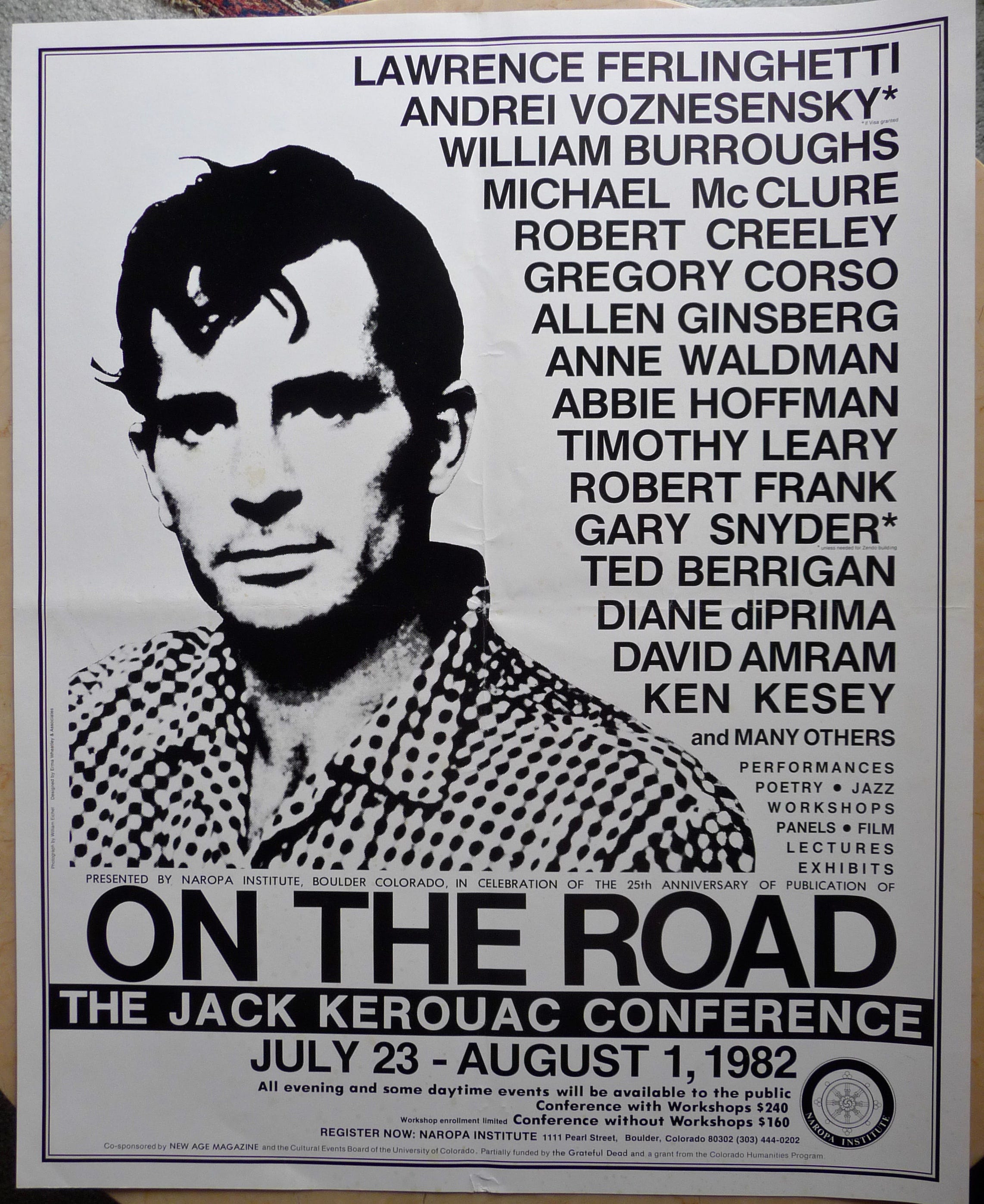
Pictured above: The poster for the 1982 Jack Kerouac conference in Boulder
Two of my heroes from my studies of the birth of the counterculture were Kesey and Bill Graham – they seemed to be the two guys who really made shit happen. Within my first year in New York I was already working for Bill Graham, and so, by ‘82, I was like, Okay – I gotta go meet Ken Kesey. I was planning to go down to Oregon where he lived, and had already written him a gonzo letter of introduction, and now all of a sudden he’s gonna be at this gathering along with Abbie Hoffman & Timothy Leary & Allen Ginsberg! And in tiny print at the bottom of the poster it said. ‘Partially funded by the Grateful Dead.’ Are you kidding?!
It took me a 90,000-word book to tell the story, but I met everybody, then went back to Kesey’s place in Oregon on the way home, and suddenly all these people were no longer just names in a book but people I’d spent a lot of time hanging out with. It was great. I was in.
LH: You’ve worked with many members of the original Beat community and their successors. Tell us about some of your favourite encounters/connections…
BH: Geez, well – there’s a million of those. A funny one was the first time I met Allen. It’s in The Hitchhiker’s Guide to Jack. I was actually involved in the production of that On the Road Conference based on my working for the Rolling Stones and all the other rock’n’roll production work I’d been doing since I was 16 or 17.
One of the first days I was there in Boulder, I had to run over to Naropa, who were putting the thing on, and as I came in the front door and started up the wide creaky old stairs to the second floor, there was Allen coming down. I was like, 21, and in those days guys wore those short jean cut-offs, and I had long hair, and I’m bounding up the stairs, and I see him coming down mid-stairs, and I knew who he was, but he’d never laid eyes on me before, and I said, ‘Oh, hey Allen! We’re all at this restaurant across the street, you should come over’, and I kept climbing the stairs to the second floor offices, and I remember how the stairs behind me did not keep creaking. Like, he just stood there watching this hot young ass he’d never seen before climbin’ those stairs.
Years later, at that big Whitney show in ‘95 – it was like three floors of stuff – the biggest gathering of Beat archives and artwork ever assembled – and it had the On the Road scroll! – taken out of Sterling Lord’s safe for the first time ever. I was there for the advance press viewing, and dig – the show’s just massive – with that huge Jay DeFeo Rose painting, and screening rooms with obscure Beat movies playing, and a bunch of Larry Rivers’ paintings and Bruce Connor sculptures and all this stuff in room after room, and finally I found the relatively tiny On the Road scroll in a plexiglass box attached to a wall.
There’s all these art critics and fancy New York types wandering around, and I’m just standing in front of this little plexiglass box – probably with my jaw hanging open – absolutely transfixed by what I was looking at, and reading the foot or so they had unfurled – almost like I’m on acid time-traveling back to Jack’s apartment on 20th Street – I can’t believe what I’m seeing!
And meanwhile there’s all these art people milling around – and nobody is registering that this is the fucking On the Road scroll just sitting right there! I was mesmerized. I don’t know how long I was standing there, but all of a sudden I felt a squeeze on the back of my arm – and it was Allen! He was passing by to the next room, but he saw I was the only guy in the whole place looking at the crown jewel. My eyes were probably as big as saucers and we shared a smile somethin’ fierce. He got that I got it and it was such a neat moment.
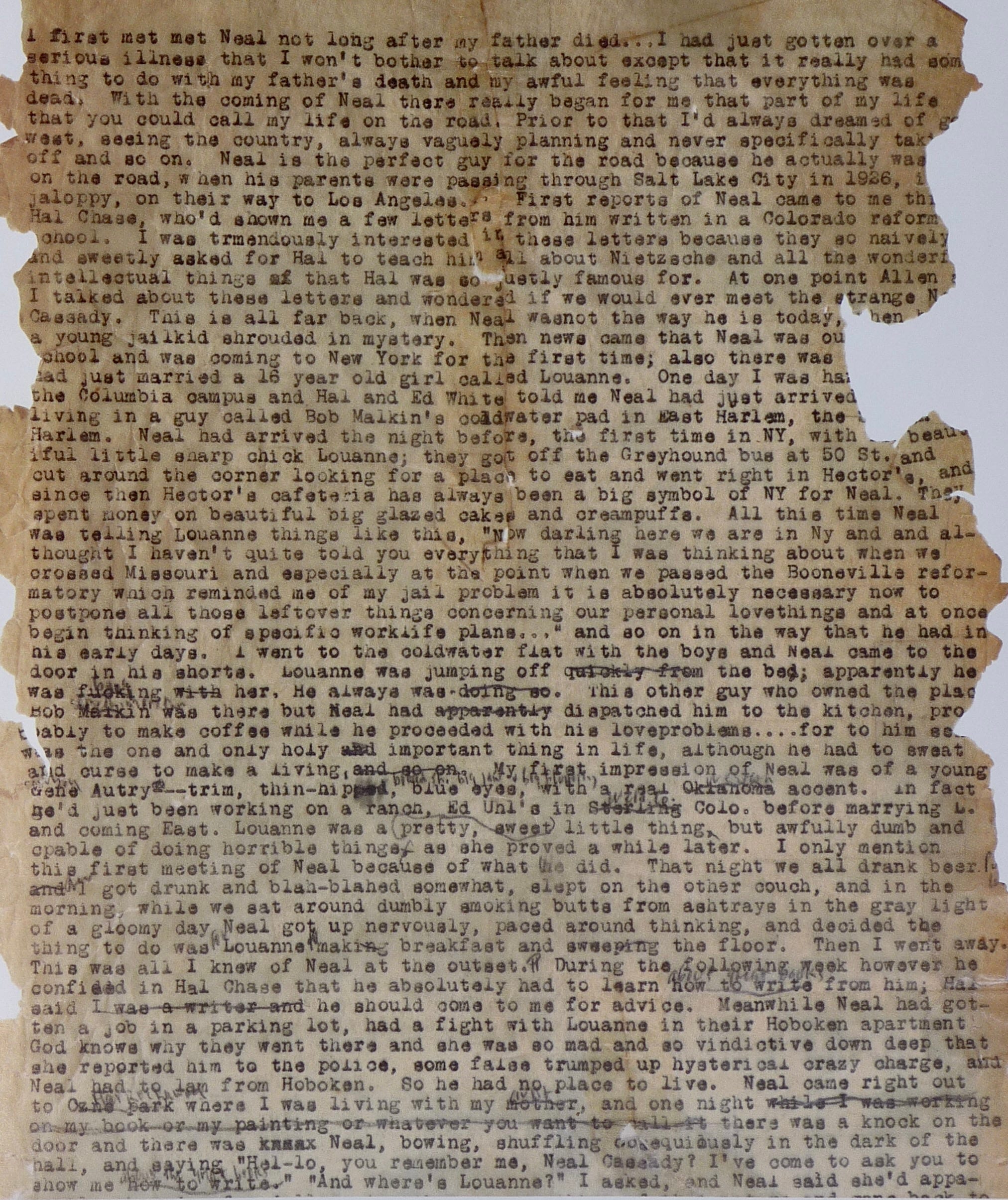
Pictured above: A fragment from the remarkable On the Road Original Scroll
LH: Do you think some of those mid-century attitudes of the Beat Generation are outdated? Or does their essential spirit continue to resonate?
BH: Oh, man! Does it! Sheesh! I mean, for starters, what the Beats were about were just basic human rights. They may have been boundary-pushing in the 1950s but they’re all things we take for granted today – free expression in art, having sex, hanging out with people of different ethnicities, having a romantic view of life, smoking the sacred herbs, having wild adventures, steerin’ clear of the authorities, exploring non-traditional religions, forming collectives of like-minded friends, staying up all night having wild conversations, recording your real life – I mean, social media is one big Beat Generation! People are capturing their real lives and elevating their friends & adventures into stories they share with the world.
People dress how they want, have relationships with who they want, romanticize their personal moments, celebrate their individuality, speak with the words they wanna use – I mean, everything the Beats were fighting for and were simply living are how people are living today. They had to break the ice and in some cases the law, and certainly took the straight world’s abuse as they were simply living their lives honestly – but here we are in the twenty-first century and people can be on the outside who they are on the inside.
LH: Which lesser known figures within the Beat Generation do you think deserve more attention?
BH: Well, the two obvious ones are Carolyn Cassady and Edie Kerouac Parker. They both birthed it and sure aren’t carved into Mount Rushmore the way they should be. Edie started the whole damn thing by introducing Jack to Lucien, and thus he met Allen & Burroughs. NONE of this would have happened without her. Her apartment on 118th Street was their clubhouse. She was the female Neal who could walk into any bar or party and have the whole room eating out of her hand in about a minute.
And of course Carolyn was the first to move to San Francisco, and then Neal and everybody followed because SHE was there. I was lucky enough to know both of them, and they were funny and smart and dynamic and it was sure easy to see why the boys fell for them. The women don’t get enough credit in the Beat Generation. It was Kerouac’s mother who housed him for so many years. It was Joan Haverty who had the job & the apartment where he wrote On the Road. It was teenage LuAnne Henderson who had the balls to keep up with those two loons on the road. It’s not called the ‘John Anderson Letter’. It was Stella who preserved Jack’s archives. It was Anne Waldman who teamed up with Allen to create the Jack Kerouac School of Disembodied Poetics at Naropa. As that old song that old San Francisco band used to sing, ‘The Women Are Smarter, that’s right.’
LH: What do you think is the biggest misunderstanding people have about the Beats?
BH: I hate that they were perceived as druggies and lazy layabouts. Kerouac has 50 different books in print – and he died at 47! Allen became the most famous poet in America for a time. Lucien Carr held a steady job at UPI for nearly 50 years. John Clellon Holmes was a respected college professor. Lawrence Ferlinghetti founded City Lights that’s still flourishing. Carolyn Cassady was a successful portraitist and writer. Michael McClure was a playwright as well as a poet and performer. Hettie & LeRoi Jones founded Yugen magazine and did all the work making that happen for years. Gary Snyder won a Pulitzer Prize. Their adopted cousin Robert Frank is one of the most respected photographers in American history. Their composer-in-residence, David Amram, was also Leonard Bernstein’s first composer-in-residence at the New York Philharmonic. This idea that they were lazy do-nothings is so ill-informed and unfair. We wouldn’t still be talking about them if they were their stupid stereotype.
LH: You mentioned the 1982 Jack Kerouac Conference at Naropa, which you wrote about so ebulliently in The Hitchhiker’s Guide to Jack Kerouac. What are some of your abiding memories of the event?
BH: Thanks. Well, it took 400 pages to tell that story, but the main takeaway back then and what’s only grown in resonance over the decades was that I was 21 and here I was meeting people who were my parents’ age and they were having fun and carrying on and rockin’ the house and laughing and still having a helluva time in life – all the while still writing books and teaching classes and performing shows.
They taught me that growing up doesn’t mean becoming your parents. They were living proof that this lifestyle I was living as a young person was not only valid but something that could be sustained. I mean, they were having more fun than any bunch of adults I ever met. And they were kind, and generous, and embracing of young people who were following in their wake. And I’ve kept that sense all my life. Even when I was in my 20s I was helping teenagers along.
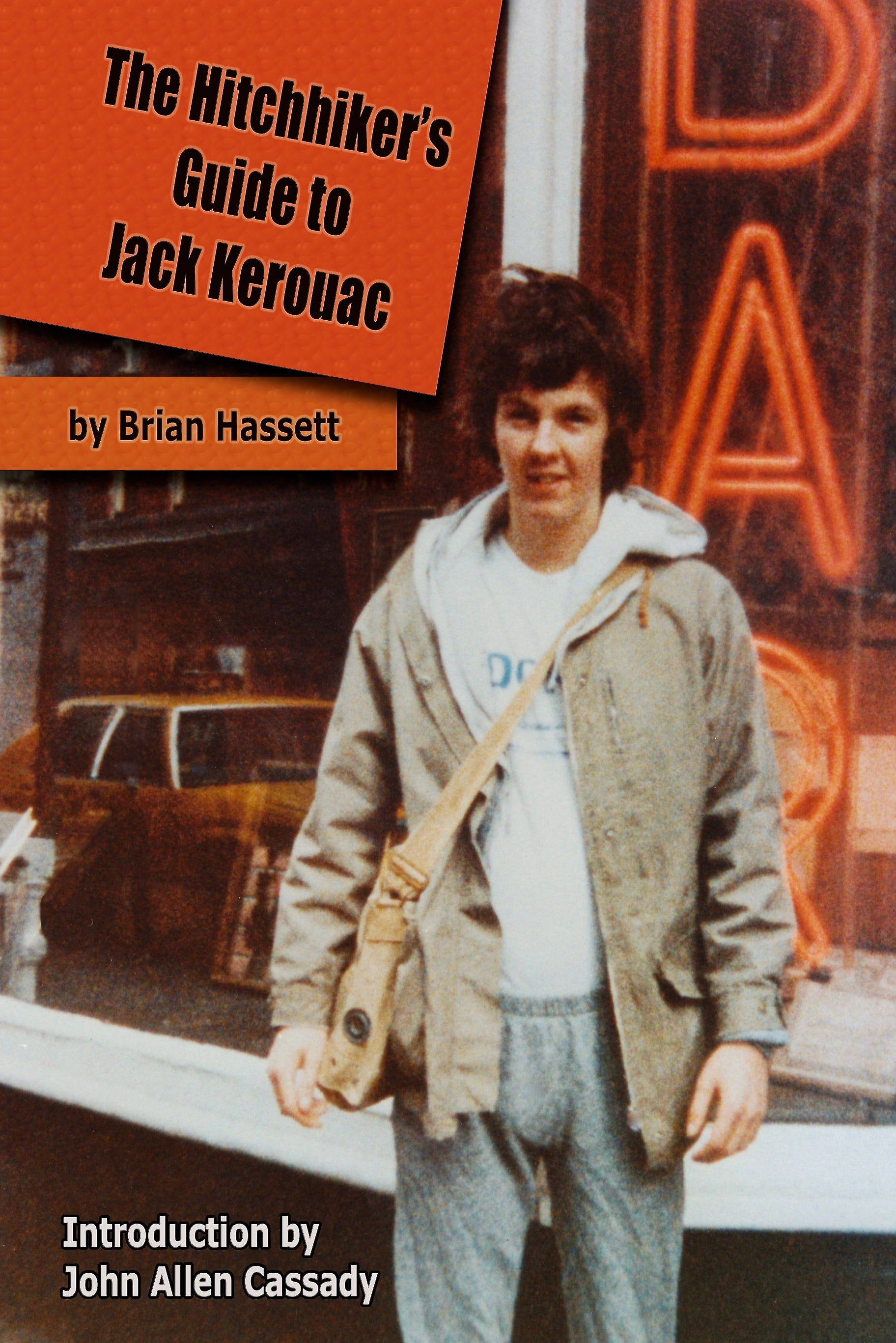
Pictured above: Brian Hassett’s 2015 book The Hitchhiker’s Guide to Jack Kerouac
I think it’s super important to share what you know with others, whatever your age. ‘Put your good where it will do the most,’ as Kesey said. Encourage young people. Pass on whatever you know that they might want to hear. If somebody has that twinkle, or is even just curious, sprinkle as much magic dust on them as you can. I think that’s kind of our job – to keep sprinkling the magic dust on everyone we meet, whatever their age – it could be someone older than you – and you’ll remind them of something they once had, and they’ll be empowered. Shine the light. That’s what I learned from all those cats all those years ago. And I’ve never forgotten it and never stopped doing it.
LH: Of which other Beat-related projects – books, events, films, etc. – are you most proud?
BH: Well, one of my favorites besides all the books and performances was putting on the ‘Jack on Film’ shows at Lowell Celebrates Kerouac. I’ve been studying film for the last five or six years and realized nobody’s ever really focused on all the times Kerouac’s been portrayed in movies or on television, so I figured out every one of them, and found clips from them all, and this young video wiz named Julian Ortman, gawd bless ’im, edited them into a presentable form, and I did it two years in a row at LCK.
The first time we had the star of Beat Angel, Vincent Balestri, Zoom in and join us, and the next year we had the director of Big Sur, Michael Polish. It rocked both theaters both times. There’s clips of both of them on my YouTube channel.
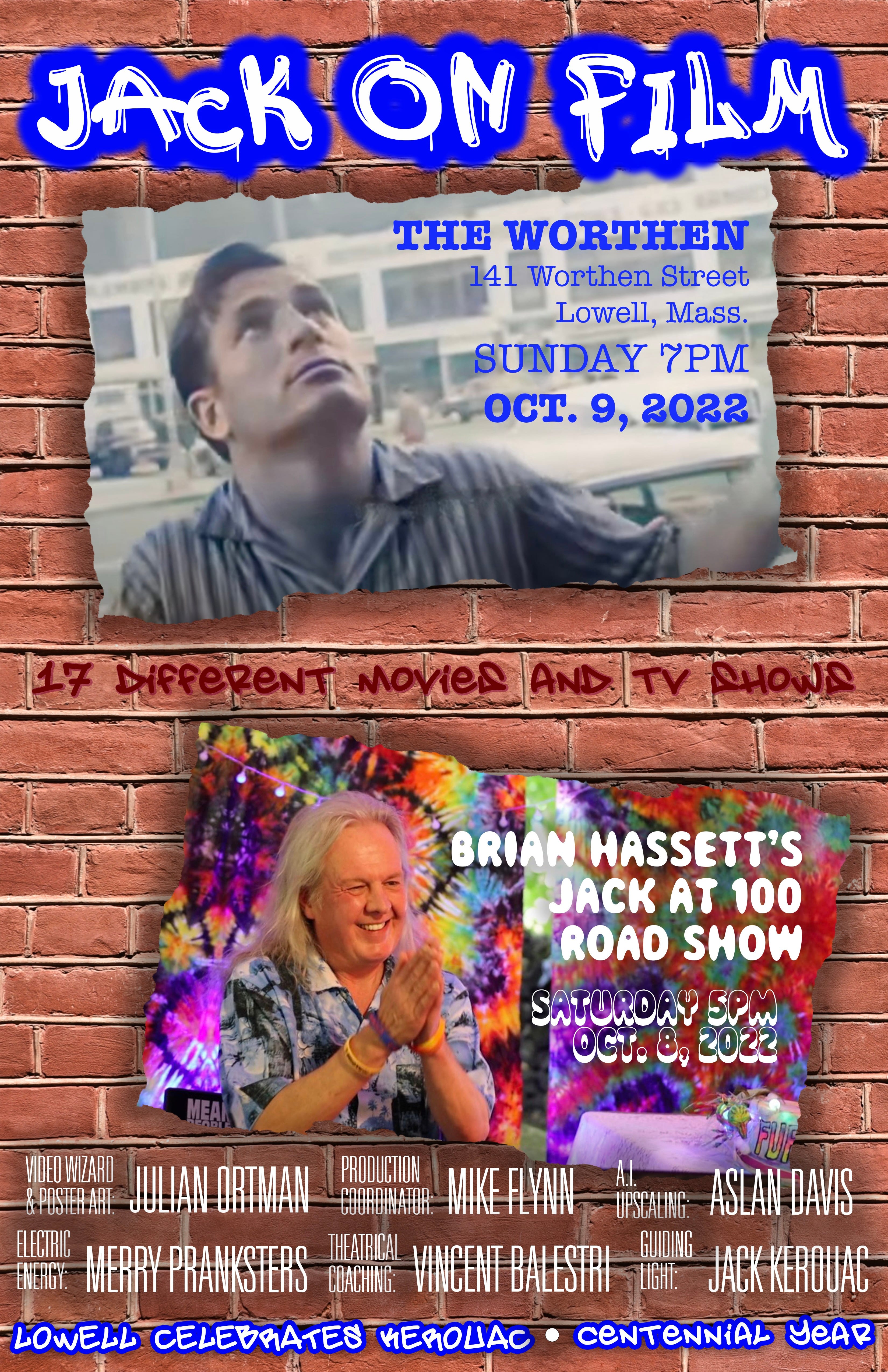
Pictured above: The poster for Brian Hassett’s 2022 ‘Jack on Film’ presentation
Jack was portrayed by John Belushi on Saturday Night Live, and Billy Zane plays him in an unfinished film, and he’s brought to life in an episode of Quantum Leap, so there’s all these bizarre portrayals over the decades that most people don’t know about. I’m really big on all the places in pop culture where the Beats show up – whether that’s in songs or TV shows or whatever.
Some people think it cheapens the whole thing if some movie star plays one of the Beats like it’s some secret sacred club that we’re not supposed to let anybody know about. But I have the exact oppose view. Anthony Bourdain mentioned them often in his hit show. I’d love it if Kerouac showed up in an Avengers movie or a Ginsberg character had appeared in Mad Men. It was reading about rock’n’roll that I discovered Jack & the Beatstock in the first place. Taylor Swift just name-checked Patti Smith and Dylan Thomas in a song. THAT’s how new fans are born.
LH: We are always interested in making musical links at Rock and the Beat Generation. Your love for and championing of the Grateful Dead is well documented, most especially in Kerouac on Record and How the Beats Begat the Pranksters, but who are some of your other favourite artists? Do they connect in some way to the Beat ethos?
BH: Well, speaking of Taylor Swift, I love the way she romanticises her own life so poetically – the same way the Beats did. And for that matter, all the storytelling songwriters – Bob Dylan & Woody Guthrie, of course – but also Springsteen, Tom Waits, Gordon Lightfoot, Paul Simon, Harry Chapin, Neil Young sometimes. And I love how Tedeschi–Trucks practises the collective the way the Beats did with an 11-piece band bringing in all these different voices to create a whole. I wrote a piece on my site about the Beatles and the Beats. Any music that’s poetic, confessional and honest, to me, echoes the best of what’s Beat.
LH: You mentioned working for Bill Graham. I was astounded to read you were 19 at the time and putting together the Rolling Stones’ 1981 tour. How did that happen?
BH: Well, that’s prolly a whole other book! It was the summer of ‘81 and I was a long-haired hippie, and it was still close enough to the hippie era that continued into the ‘70s, and I never succumbed to the punk trend or new wave or anything and was sort of a young manifestation of what the people in the music business were like – where they came from. I’d gotten a job with the big concert promoter in New York as just sort of a general production assistant.
Any concert at Madison Square Garden would have a production coordinator who worked for the promoter to make sure all the production aspects went down correctly from building the stage to the lighting rigs and making sure the seats were the way they were supposed to be and the dressing rooms had everything that the contract stipulated – all that kinda stuff.
At a Styx show at MSG, the production coordinator was the famed Michael Ahern who did the Watkins Glen concert which had the largest attendance in history at that point, and he also did the production at the Fillmore East for all those years. He and I just sorta hit it off in that one day together with Styx, then when it came time to do the Stones tour, he was Bill Graham’s go-to guy, and he called and asked me to be his assistant, and I became one of just seven people in the office who put that whole tour together. It was a dream come true because Bill Graham was the ultimate hero to me. Other people were excited I was working for the Rolling Stones – but I was excited I was working for Bill Graham!
LH: Speaking of Rolling Stones, how did you become involved with The Rolling Stone Book of the Beats?
BH: Well, that’s another New York story. Back in the mid-’90s I started performing a fair bit – doing this sort of theatrical spoken word thing. I went to a lot of poetry readings and famous authors’ appearances and I noticed a lot of times people just read in almost a monotone – there was no drama to it. I was also going to a ton of theater! And I sorta studied how actors delivered their lines – and saw that skill was not being applied in the literary/poetry scene. So I started dramatically performing and bringing my poetry or prose to life on a stage like actors would.
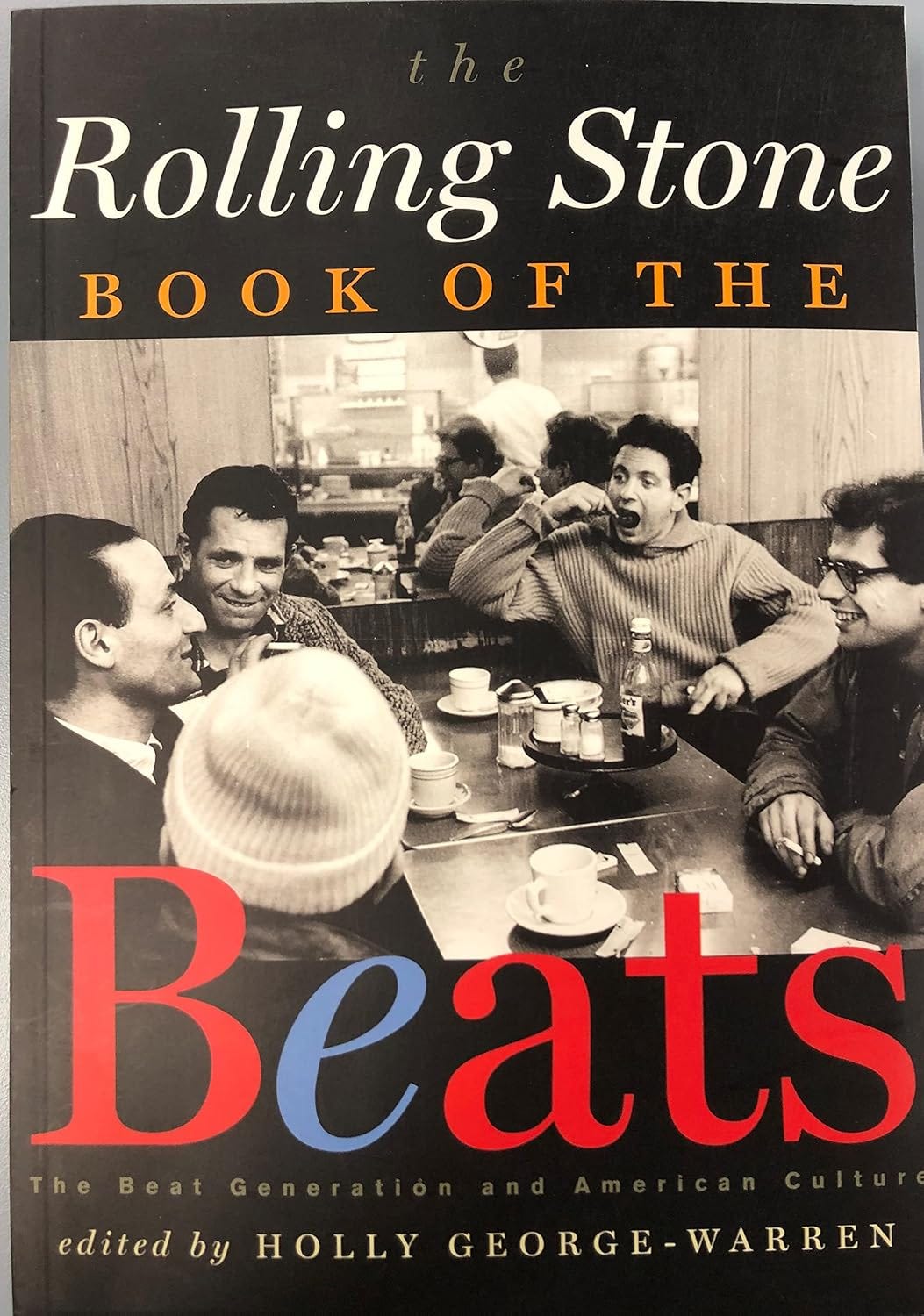
Pictured above: Holly George-Warren’s Rolling Stone Book of the Beats from 1999
My girlfriend was working at the Village Voice and Holly George-Warren sometimes did short pieces for them, and she and her husband Robert were part of the East Village performance scene. He was a singer-songwriter and we shared a lot of stages. And Holly was smarter and better read than most of the downtown bohemian crowd, so we really got along, and quickly found we had a mutual love of the Beats. And then Holly spearheaded The Rolling Stone Book of the Beats and called me as soon as it got the go-ahead, and we talked about what had to be in there, and who was still alive who she could contact to write something.
Around this time I was also helping David Amram write his memoir – which is a whole other story – but through that and other things I was in touch with a lot of people. So I was kinda helpin’ Holly put the band together. And then she told me I should write about whatever I want. I was always interested in the Power of the Collective, which I mentioned earlier – the exponential effect of people working together instead of as isolated individuals – cuz I thought that was such a key aspect of the Beat Generation. Then I always wanted to explore 1945 to 1955 – how that 10-year span at the center of the century birthed virtually everything we know in culture to this day.
So I did those two pieces – but it all grew out of ‘the power of the collective’ in a way. Just like the Beats had this gang in the clubs in the Village – an evolution of that was still going on in the ‘90s. Smart people with a bohemian bent were still gathering in New York clubs and making shit happen and sharing ideas and discoveries and passions. It was great. It was very organic and natural and open and creative – all these people were blossoming in their own ways. And Holly & I were two like-minded flowers blooming in the same garden.
LH: What do you think is the lasting legacy of the Beat Generation? Do you think people will still be discussing them in, say, a hundred years?
BH: Oh, of course. Paul Thomas Anderson – who created one of 2025’s greatest works of art with One Battle After Another – just cited Kerouac in an interview with the UK Directors Guild. It’s neat how they came from this pencil & notebook world. And even typewriters are now sorta like horse-&-buggies. It was this simpler world, and I think that’s always going to be appealing. And that they created this real-world collective – a Beat generation – that’s something people are still longing for – but are all-too-often finding virtually online. People physically sitting in cafes or bars and palling around together – that’s almost like science fiction now! And even if their popularity ebbs and flows, there will always be people who rediscover them.
And that’s another reason why I think it’s important for all the women of the Beat Generation to continue to be acknowledged and amplified. Women are half our planet, and they were way more integral to the whole thing than is sometimes acknowledged. Carolyn Cassady is someone to look up to. Anne Waldman is still out there kickin’ ass. Joyce Johnson and Ann Charters are two of the biggest proponents of everything Beat. Holly George-Warren is writing the new official Kerouac biography, and that’s gonna be huge. As readers of this site know, there’s a basically endless number of books by and about the Beats. You could spend every minute of your life reading them and you’d never get to the end. This is a movement that’s built to last.
LH: Is there a current project you’d like to talk about – a book in preparation, an essay or an article, a podcast or a film in production, live appearances or a tour planned?
BH: Well, I’ve produced at least one new piece every month for the last 18 years for BrianHassett.com, so there’s a lot going on there. Plus I have a YouTube channel that I’m about to add a bunch more clips to. And I’m going to be part of the big Hunter Thompson GonzoFest in New York City in July which is gonna be a huge gathering of writers with a Beat bent.
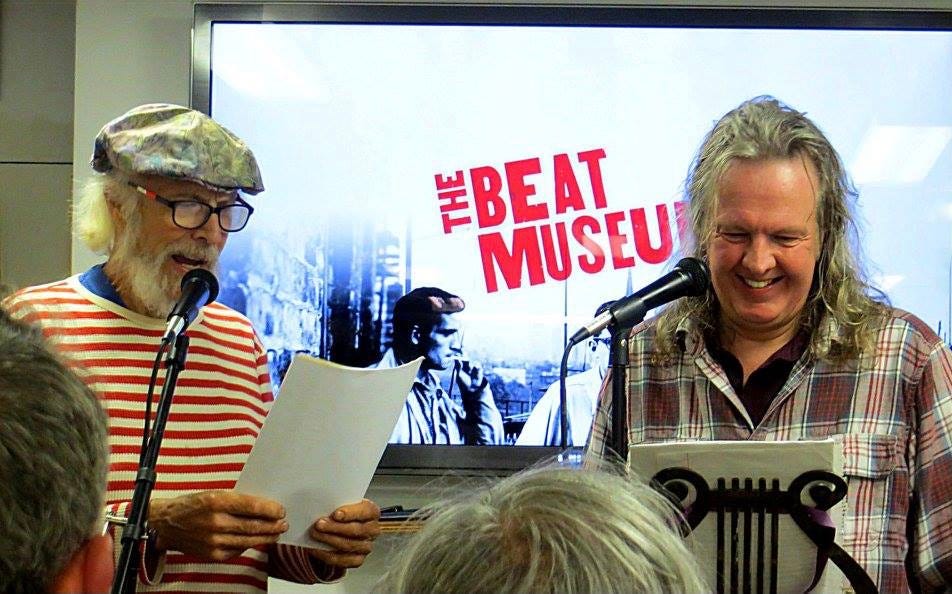
Pictured above: George Walker with Brian Hassett on stage
And Cassady friend George Walker & I may do some more ‘Jack & Neal Ride Again’ shows along Route 66 this summer as part of the mother road’s centennial. And I’m part of some artist/musician communities in Pennsylvania and on Long Island that I’ll be performing with. But the main thing I’ve been involved in and writing about the last five years is film.
I never really got around to studying it until we were locked down with the pandemic, and I realized – speaking of the power of the collective – film is the most collaborative art form humans create. So that’s the bulk of what I’m writing about now – how these masterpieces are created, and what makes a masterpiece. And it may be the richest vein I’ve ever tapped.
LH: Thank you so much for talking to Rock and the Beat Generation and kickstarting the new ‘Generation Beat’ series…
About the interviewer: Leon Horton is a UK-based countercultural writer, interviewer, and editor. He is the editor of the acclaimed essay/memoir collection, Gregory Corso: Ten Times a Poet (Roadside Press, 2024), and interviewer of authors Victor Bockris in The Burroughs-Warhol Connection (Beatdom Books, 2024) and Stewart Meyer in The Bunker Diaries (Beatdom Books, 2025). A regular contributor to Beatdom literary journal, Rock and the Beat Generation and International Times, his essays, features and interviews have also been published by Beat Scene, Erotic Review and Literary Heist.
See also: Book review #33: Live Dead’, October 25th, 2024; ‘Murphy’s lore: “Acid and orgasms”’, May 21st, 2024; ‘Beat Soundtrack #15: Brian Hassett’, April 9th, 2022
 | A guest post by
|