
Interview #47: Mark 'Mooka' Rennick
Owner of studio home to Waits classics

MARK ‘MOOKA’ Rennick, self-described as ‘a farm boy from rural Illinois’, started recording local bands on a cheap analog tape machine while still a student at Sonoma State University in the 1970s. He managed to pick up a mixing board previously used by the Beach Boys, moving to a former chicken farm in Cotati, CA, where he built Prairie Sun Recording.
The facilities have become a residential recording studio for top-notch artists who have flocked from around the world to, as Mooka puts it, ‘live, eat and breathe music together’. One of the most high-profile clients has been Tom Waits, a musician who remains very loyal to his Beat influences. These were often evident in a magnificent body of work recorded by the man at Prairie Sun itself.
It hasn’t only been Waits who has drawn to the studio for both its technical attractions and conducive creative atmosphere. Major names like the Grateful Dead, the Doobie Bros, Van Morrison and Ramblin’ Jack Eliot have also been associated with this storied recording space over the years.
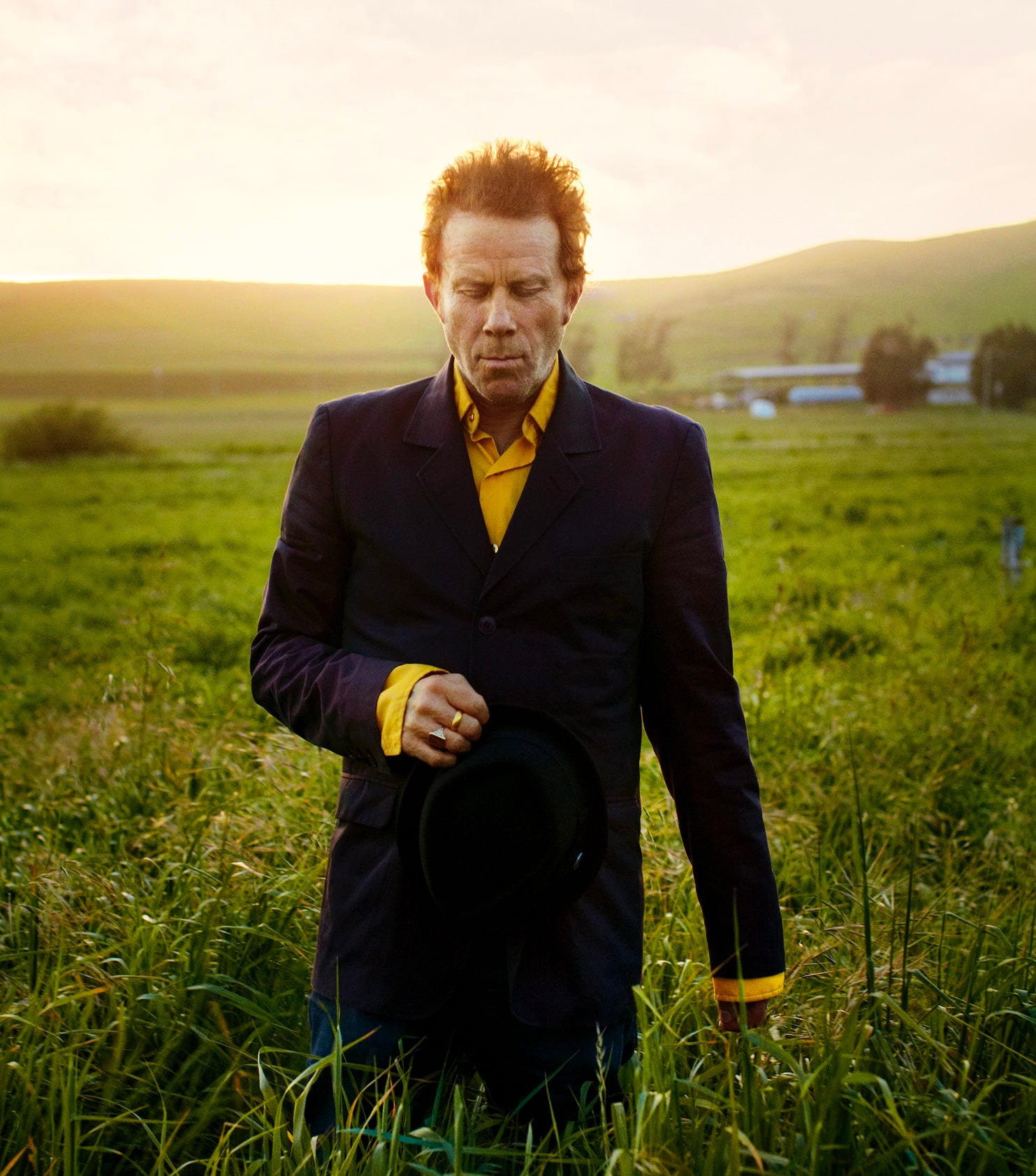
Pictured above: Tom Waits was a regular presence at Prairie Sun studios
But Waits produced a series of significant records at Prarie Sun from the late 1980s into the early 2000s, including the remarkable contribution to Jack Kerouac Reads On the Road when the singer collaborated with Californian funk metal band Primus on the Kerouac song ‘On the Road’ in 1999, a swamp blues companion to the novelist’s own stripped back version on the same landmark work.
Other key records from the Waits catalogue have also emerged from this rare and inspirational setting: Bone Machine (1992); The Black Rider (1993), an extraordinary co-project with William Burroughs; Mule Variations (1999); and much of the sprawlingly eclectic triple collection Orphans: Brawlers, Bawlers & Bastards (2006).
Rock and the Beat Generation Founding Editor SIMON WARNER spoke to MARK RENNICK, 73, about his successful studio venture with particular reference to Waits’ time when he laid down a voluminous collection of important material over almost a decade and a half…
__________________________________________________________________________
Simon Warner: Hi, Mooka, and thank you for agreeing to talk about your renowned studio, its intriguing history and international reputation. Would you describe yourself principally as proprietor/owner of the studios or consider yourself also a creative contributor/producer/engineer to the operation’s activities?
MR: I would absolutely describe myself as the owner of the studio, as well as a creative contributor/producer/engineer. My job has been to provide a safe, open, conducive environment. I also did the toilets and washed a lot of dishes!
SW: How long have you owned Prairie Sun?
MR: I’ve been here since 1980, but I’ve been a recording studio entity for a long time. Prairie Sun Recordings really started in a college student rental house that I basically overtook and turned it into a recording studio. Then I came here to this property.
SW: It’s also exciting to chat about a composer and performer who, in many ways, most embodies the Beat Generation spirit in his output. It must’ve been a thrilling time to have Tom Waits in the studio, working so creatively and productively. What was it about Prairie Sun that drew him there?
MR: He moved here. I’d like to say that he went out of his way to find this bucolic environment, but he actually moved to Sonoma County.
I don’t want to take any credit. It was a perfect storm of a very avant garde person and this studio. Prairie Sun is really not a pretentious situation. It’s very raw and it’s very basic.
He started to do a film score called Night on Earth in 1989 and that was in Studio B. We did Night on Earth with Jim Jarmusch and then Bone Machine and The Black Rider and then Mule Variations, officially. Those were what we call the seminal album projects. They released that Orphans record and that had a massive amount of unreleased work on it. 60 or 70 percent of the outtakes were from Prairie Sun.
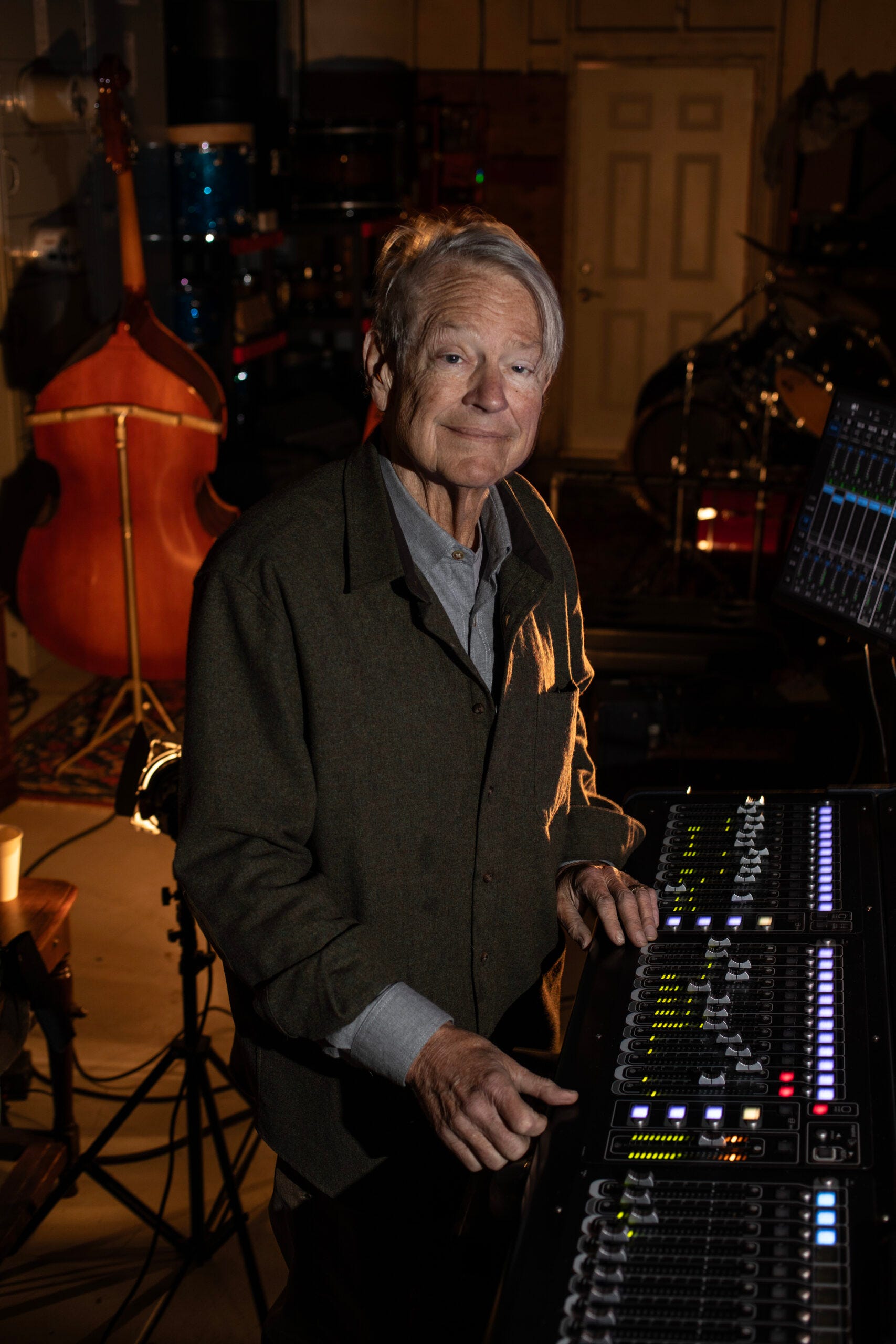
Pictured above: Mark ‘Mooka’ Rennick, owner of Prairie Sun Recording. Credit: Chad Surmick, Sonoma Magazine
SW: So Tom comes to you in 1989 and says, ‘Hey, I’m a local and I need to record somewhere.’ Is that the gist of how his relationship started?
MR: Well, Tom initially came to us because of a guy named Bob Forrest in a band called Thelonious Monster. He was a good friend of Tom’s from Los Angeles. He wanted Tom to do the overdubs on his album. He came up from LA, it was 6 o’clock in the evening and Tom came into Studio A [to] record some vocals on [Forrest’s] album.
Then, Tom had a live gig down in San Francisco at Bill Graham’s Civic Center and he needed a rehearsal place. So, he went down to Studio C and he auditioned all these different players from the Bay Area. He was just coming into the town. Just coming in, you know.
They came down to Studio C and then he heard the acoustics of the room, especially what would become the Waits Room. He got the vibe, and after doing the live gigs he came in and booked Night On Earth with the engineer Biff Dawes.
Dawes was the main guy for Bone Machine until Tom’s schedule stopped and Biff had to take another gig that he’d already booked. Then Tom came in with Tchad Blake to finish Bone Machine at Prairie Sun. That was the beginning of lo-fi movement.
SW: Tom and [wife] Kathleen [Brennan] were the producers, no question?
MR: No question.
Pictured above: Tom Waits at work at Prairie Sun Recording
SW: I was wondering if you observed any moments in which Tom or Kathleen give direction in terms of shaping a musical moment or mood. For example, engineer Mark Howard writes in his book Recording Icons/Creative Spaces that Tom had asked him to ‘put a little more hair on it’ in reference to a vocal track.
MR: I couldn’t do that. One of the most important things for me as a studio owner is, I don’t come in and sit in. I loved having him here. I wasn’t breathing Tom though. I’m very honored that he’s done so much work with us.
SW: Can you recall any songs from Mule Variations that ended up on Orphans?
MR: I can’t. I can’t. I wasn’t involved in the production. I was – and still am – the studio owner. I was around a lot. But no, I have a policy of showing a lot of respect for artists when they record here. I let them work. You’ve gotta understand, he did a thing where he would cut many tracks and then he would only pick nine or ten. Then he would keep the other ones in his reservoir, hence Orphans.
‘Chocolate Jesus’, you know, was fun. ‘What’s He Building?’ was fun. ‘Filipino Box Spring Hog’, that’s when he went into the chicken buildings and grabbed some old box springs. He took those, brought them into the Waits Room and they all jumped up and down on ‘em.
He had also brought some stages – small, wooden stages – into the room and then Les Claypool [of Primus] and a whole bunch of people stomped on the wood stages. They had a false bottom. That was a lot of fun.
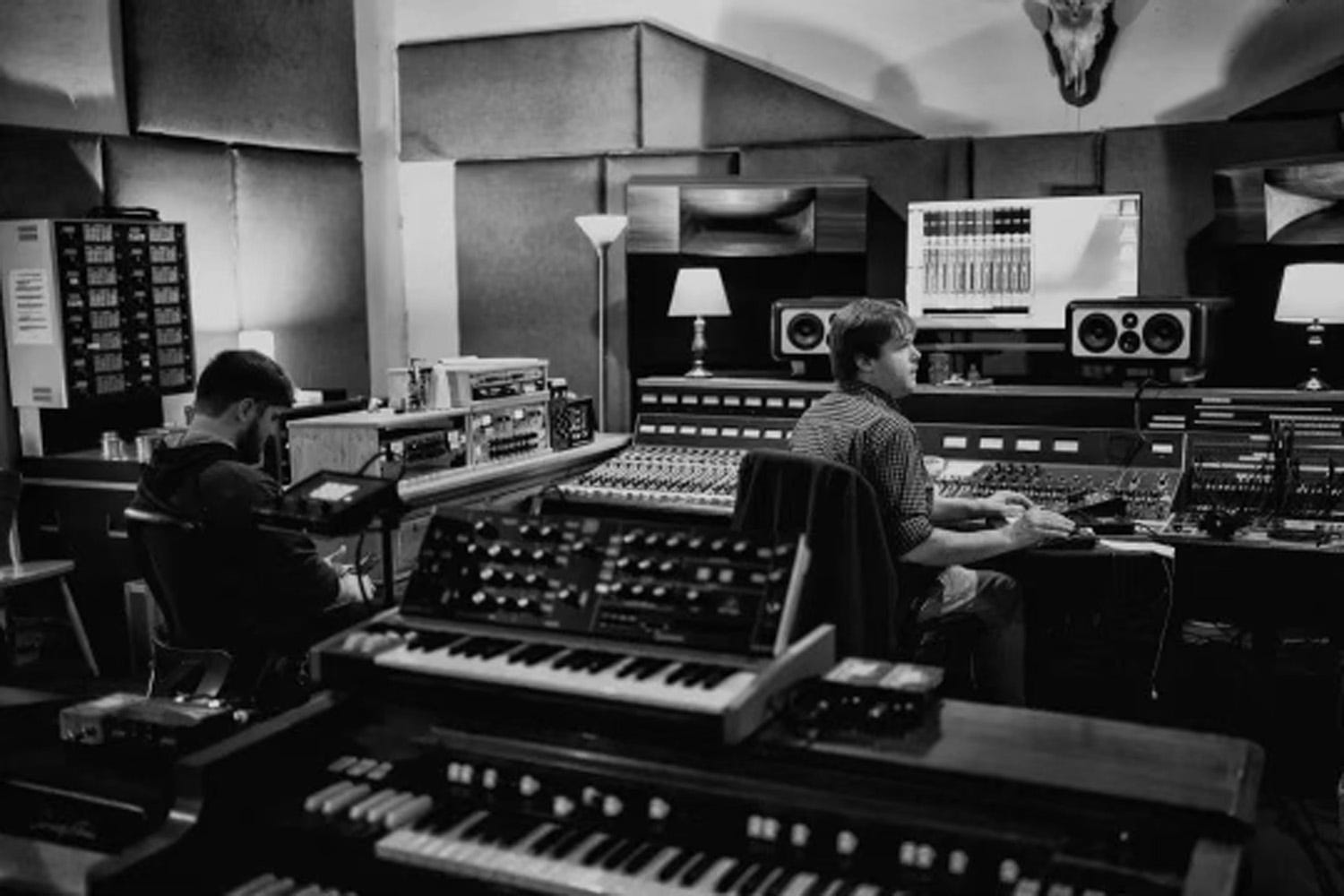
Pictured above: The desks at Prairie Sun Recording
SW: He also did a lot of recording, off and on, outside. ‘Chocolate Jesus’ was tracked right outside of the Waits Room, correct?
MR: That’s right. Yeah.
SW: With a couple of shotgun mics?
MR: They were not shotguns. They just put some of my condensers out there. A great story is while Tom was doing ‘Chocolate Jesus’, none of us knew he had been planning that and I drove up and there he is, he’s recording.
I say, ‘Jesus Christ, he’s recording outside and we’re driving right by his session!’ We didn’t even know this was happening. I talked to him later and he famously says, ‘I love the car. I love the distortion on the tape. I want it to be real.’
I said, ‘Well, we can stop people coming in, you know?’ He said, ‘No no, man. Just let it flow, Mooka. Just let it go, just let it go.’
SW: ‘Chocolate Jesus’ is a song that feels like a hot summer day. When were these sessions recorded?
MR: They definitely weren’t winter. I think spring. Spring and summer. He would do these in spurts. I’m listening to ‘Chocolate Jesus’ right now as we talk. Let me listen for a second.
SW: Sure…
MR: The banjo was recorded in the Waits Room.
SW: Can you tell just by hearing that banjo that it was recorded in the Waits Room?
MR: Yeah, I can. I can. You’ve got to understand, every note after he did Night on Earth, was recorded in the Waits Room or any of the live chambers; 99% was in the Waits Room.
SW: What are some of your favourite songs on Mule Variations?
My main song is ‘Hold On’. ‘What’s He Building?’ is another song I really like. ‘Big In Japan’ was huge for me. ‘Big In Japan’, I would say is my favorite. But ‘Big in Japan’ was huge and it was actually mixed in Studio A by Oz Fritz. It had a different sound.
SW: That was that Trident board?
MR: Yes. Bone Machine was all cut on a Trident TSM in Studio A and using just the Waits Room and the live chambers. It was a very aggressive sound. The rest of Mule Variations was recorded and mixed on the Neve in Studio B, all analog. All the recordings were analog.
‘Big In Japan’ was the first track of the whole album that they mixed. It was a pre- release. That was when we were on our Neve desk. At that point in time we had Pete Townshend’s mixing board in B.
When you hear ‘Big in Japan’ and you hear that vocal, and the vocal’s all distorted, he did the distortion with a megaphone. Long before he got to Sonoma County he was using megaphones. He was doing all these different, what I would call very experimental, sounds.
He also belonged to this organisation called the Experimental Music Group. It was a group of cats who built glass xylophones instead of 88 key harps for pianos, There was this famous guy named Harry Partch, who actually lived here in Sonoma County, who would cast piano harps with oddly tuned harmonic structures.
These guys, guys like John Waters of the famous Waterphone, lived in Sebastopol. He was a good friend of Tom’s. He belonged to this cadre of people that designed and built experimental music instruments. But back to Mule Variations...
Tom was famous for his megaphone type of distortion. By that period in time, he had already worked with Tchad Blake. They actually, with Bone Machine, had broken a lot of ground using SansAmp and broken compressors and strange PA systems from Japan, out in the tarmac.
CMJ, the College Music Journal, said that Tom Waits was really the beginning of the lo-fi movement. Danny Lanois, who went on to work with everybody, said in a number of publications that Bone Machine was the beginning of the lo-fi movement.
SW: You seemed very keen to make sure that Waits and Brennan were fully credited with the creative input to their sessions.
MR: Kathleen and Tom had a great relationship with my staff and our team.
SW: Has that relationship with the artist now concluded or does he still use Prairie Sun?
MR: No, Tom Waits stopped working at Prairie Sun officially prior to the production and release of Alice and Blood Money. A large percentage of the songs for Orphans: Brawlers, Bawlers & Bastards were outtakes recorded and mixed at Prairie Sun Recording.
It’s also important to add that we commercially closed our location on June 1st, 2022. Our existing studios are in the Portland-metro area, and Sonoma County. Talent is always in demand. Wherever the talent works, that’s their home.
SW: Thank you, Mooka, for sharing those insights into the world of your famed recording location and the way Tom Waits worked so productively there for a considerable period…
that's awesome to know my 2 favorite Waits LPs were recorded there....Bone Machine and Mule Variations, even more than Swordfish, Rain Dogs, Small Change, et al they are my faves......murky sound, chains on the asperity of wood, etc...Mr Rennick seems cool with his laissez faire attitude
My dear friend Cliff Buck Kaufman was an original Prarie SunRecording studio creator I had the privilege of sharing the Beat road with Cliff in London Spain Amsterdam and Thailand and was a celebrant @ his wedding in Vietnam and Cliff extended his hospitality as the Shah of Cotati to let me crash on his grounds @ Prarie Sun where I met Prarie Prince Tom Waits the Tubes and other great musicians & artists - Cliff Buck passed away recently and I wish Mookie much love & Success in all his accomplishments and dreams Frisco Tony